|
End links connect processing
core-functions with the blending, distribution, marketing and sales
functions that lead to the application of carrageenan end products. |
|
|
|
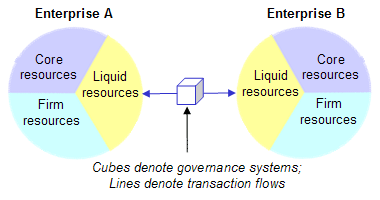
Core resources are the basis of an
enterprise's competitive advantage. They often referred to as
"core competencies" or "unique resources". It is an important aspect
of core resources that they comprise the unique “inelastic” component
of resources that enable an enterprise to operate beyond the dictates
of simple supply-demand dynamics in the market environment. |
|
Core resources: |
|
1. |
include the collective assets,
skills, talents and know-how that confer competitive advantage to
the enterprise. |
|
2. |
include ownership of highly
desirable land, water and harvest rights that can be an essential
component of the resource base for specialty crop SMEs. |
|
3. |
are the result of strategic
asset placement or of strategy-driven learning built through
continuous improvement and enhancement over several years. |
|
|
Core resources are
closely held in-house except when the enterprise participates in
strategic alliances. The combination of enterprises’ complementary,
compatible or synergistic core resources is an essential determinant
of whether an alliance is truly “strategic” as opposed to being
“tactical”. |
|
|
 |
|
Firm resources support business functions
of an enterprise. They are so designated in the sense that they are
“solid” and are necessary for the effective functioning of an enterprise.
Tangible firm resources are readily governed by enforceable legal
means and include: |
|
1. |
Financial capital (e.g. saved
funds & other negotiable papers). |
|
2. |
Physical property (e.g.
equipment, buildings, land and goods. |
|
3. |
Intellectual property (e.g.
brands, patents, trademarks). |
|
4. |
Legal property such as
concessions and quotas. |
|
5. |
Intellectual structural capital
such as databases, information systems, libraries, processes and
documents. |
|
|
Intangible firm resources include
attributes and activities not readily reduced to physical objects or legal
documents such as: |
|
1. |
Intellectual human capital
including non-core support competencies, experience, knowledge. |
|
2. |
Customer capital such as
goodwill, customer relationships, brand recognition/value/loyalty,
reputation. |
|
3. |
Organizational capital such as
investors, allies, suppliers, communities, partners and other
stakeholders. |
|
4. |
Social capital such as trust,
mutual understanding, shared values and behaviors that bind
networks. |
|
|
|
|
Liquid resources are media of
exchange. They can be used by business organizations as they
undertake transactions. Like firm resources they can be in the form of
tangible or intangible resources. |
|
The difference between
“firm” and “liquid” resources is that firm resources are retained as
long-term assets of the enterprise but liquid resources are designated
for exchange during the conduct of transactions. |
|
|

.jpg)

